
As the signal source of CT tube equipment, the tube is one of the valuable central components in CT equipment. Its performance directly affects the image quality and service life of CT. Since 1896, when C.H.F.Muller of Germany created the world's first X-ray tube with practical application significance, people's improvements in tube technology have never ceased...
Prelude
The discovery of X-rays
To explore the development history of the tube, we have to go back to Rontgen's discovery of X-rays: In 1895, the German Rontgen discovered X-rays while experimenting with a cathode ray tube.
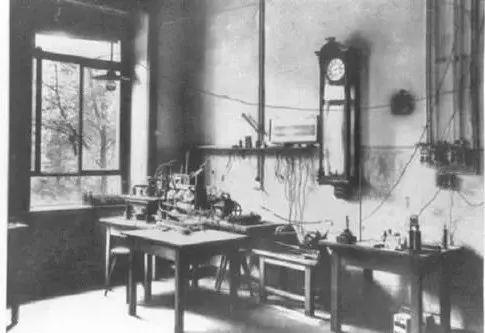
Rontgen Laboratory
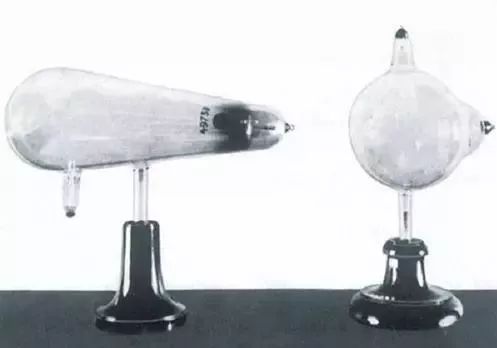
The cathode ray tube used by Rontgen
This occasional discovery excited Rontgen, who put aside other research work and concentrated on studying the properties of X-rays. After several weeks of frantic work, he discovered the following fact:
(1) The production of X-ray tubes can not only cause barium cyaninplatinate to fluoresce, but also induce fluorescence in many other chemical products.
(2) X-rays can penetrate many substances that ordinary light cannot. Especially, it could directly pass through the muscles but not the bones. Rontgen placed his hand between the cathode ray tube and the fluorescent screen, and his hand bones could be seen on the screen.
(3) X-rays travel in a straight line. Unlike charged particles, X-rays do not shift due to the influence of a magnetic field.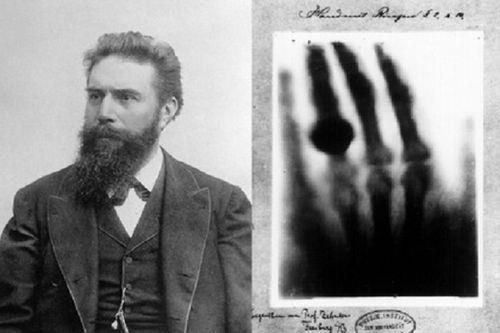
The world's first X-ray photo
After Rontgen discovered that the X-ray news was released, almost all European laboratories immediately used X-ray tubes to stop experiments and take pictures.
A few weeks later, X-ray tube assemblies had begun to be applied by medical scientists. Doctors have precisely revealed human bones using X-rays, which is a new discovery in physics being rapidly applied in medicine.
In memory of Rontgen's dedication to physics, later generations also referred to X-rays as Rontgen rays and used Rontgen's name as the unit of illumination for X-rays and others. In 1901, Rontgen won the first Nobel Prize in Physics for his discovery of X-rays.
Previous life
The creation of the ball tube
With the strong assistance of Professor Walter, the German C.H.F.Muller created the world's first X-ray tube with practical application significance in early February 1896. This was a very simple tube without clear focal point focusing.
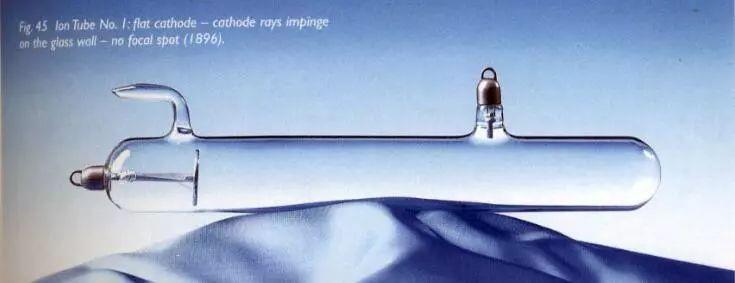
The world's first X-ray tube without a focus
After the filament is powered on, X-rays are emitted throughout the bottom. For this reason, the received image is very blurry. In the same year, C.H.F.Muller produced the first X-ray tube with a focus for Professors Walter and Voller. This spherical tube converges X-rays at a single point through a concave mirror placed on the cathode. This landmark creation greatly enhances the clarity of the photos and shortens the exposure time.
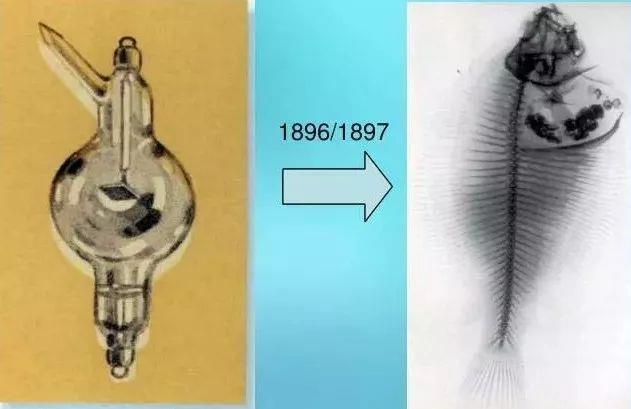
A stadium with a clear focus
This improved tube emits X-rays from a specially made platinum sheet placed diagonally symmetrical to the cathode, which resembles the shape of a convex mirror. When current is passed through both ends of the tube, the cathode emits an electron stream that strikes the platinum sheet, which is what we commonly call the anode today, and thus X-rays are produced. This type of tubular structure has a clearer image than before because it has an important small focal point.
Classic golf clubs in history:
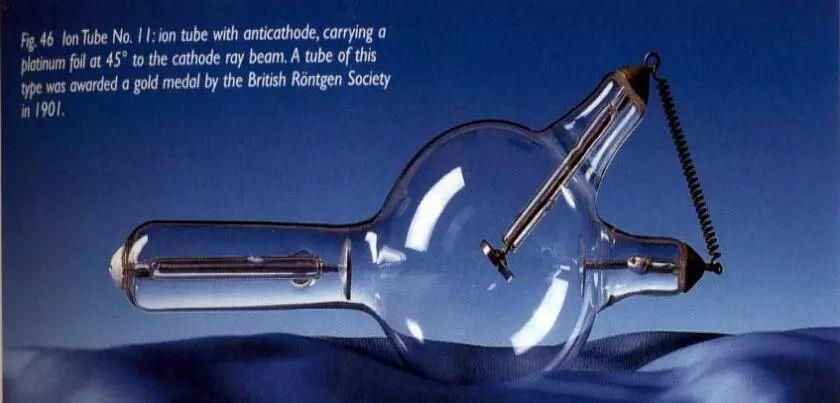
In 1901, this tubular anode target was made of platinum and was symmetrical to the electron flow emitted from the cathode at a 45-degree Angle.
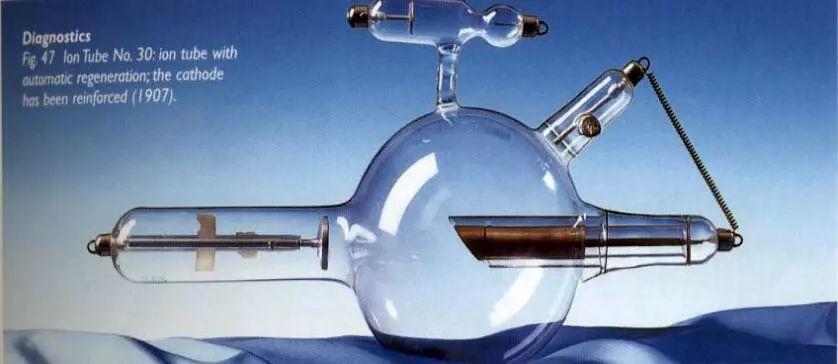
In 1907, this was a spherical tube with an automatic recurrence function, and the cathode was enhanced.
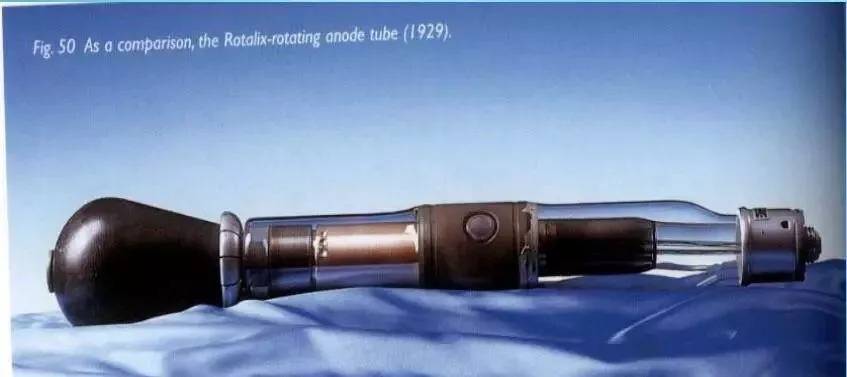
This is a spherical tube with a rotating anode

A ball tube with a water cooling system

It is equipped with a water automatic evaporation installation tube, which is one of the most effective ion tubes in radiotherapy
In the early days, X-ray tubes were difficult to start when heated by electricity due to the presence of residual gas inside the glass tubes. Moreover, the low vacuum degree led to short working hours and a short lifespan of the tubes. At the beginning of the 19th century, William Corritz, a physicist at the General Institute for Electronics in the United States, designed and created the vacuum tube. It used a filament to emit an electron current when electrified to produce X-rays. The vacuum tube was more accurate, stable and sturdy than previous tubes, and could achieve better image effects.

William Corritz
After a long period of theoretical experiments, in 1913, his tube was introduced into the medical field and applied in clinical practice. At present, the X-ray tubes used in radiological medicine are basically all improved on the basis of the tubes designed by William Corritz.
This life
The current situation of CT tube development
The advancement of science and technology has promoted the development of modern medicine. CT, as an imaging diagnostic device widely used in clinical examinations, has evolved from conventional photography in the past to today's brain scans and cardiovascular angiography, experiencing a development from single-layer to spiral multi-layer.
The significance of the X-ray tube as an X-ray source is beyond description. For multi-slice spiral CT continuous and discontinuous scanning, the X-ray dose is large, so the CT tube is required to have a higher heat capacity. The improvement of heat capacity requires continuous improvement and advancement of the tube material and the structure of the rotating anode. Small (micro) focal points, large capacity, high-frequency high voltage and its stability, high-speed rotating anode (low noise), filament emission divergence, etc. have become the development directions of tubes.
At present, the standard configuration of multi-layer spiral CT tubes has reached 6-7 mHU, and due to the improvement of materials and processes, the heat dissipation rate has approached 1MHU/min.
In recent years, a spiral grooved hollow anode handle using liquid metal as a lubricant has been created, which effectively extends the service life of the tube and ensures stable and clear image quality during continuous scanning. Some manufacturers have also attempted to apply multi-tube and flying focus technology to CT machines...
This life
International market
Siemens Healthineers
Siemens announced that it has developed an electron beam controlled tube that is claimed to have "no heat capacity" by applying Straton's high-energy laminar technology. The electron beam controlled metal tube is different from the traditional X-ray tube. The anode and cathode are fixed together on the rotating shaft and directly immersed in insulating oil. When the tube is working, it is no longer the anode that rotates, but the entire tube rotates under the drive of the motor. Since the reverse side of the anode is directly against the tube wall, it is very easy to dissipate heat. The cooling oil directly takes away the heat through the inlet and outlet circulation. The function of the deflection coil is to direct the electron beam to the appropriate position at the anode to bombard the target surface and generate X-rays. By applying a signal to the deflection coil, the position of the focus can be changed to achieve the purpose of flying the focus.
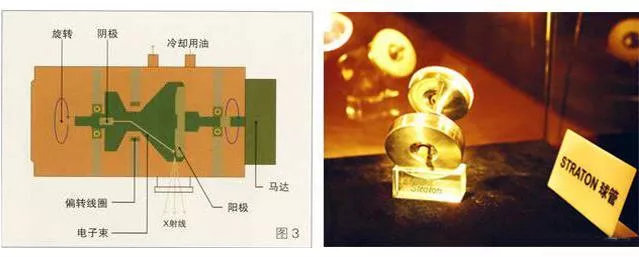
Straton electron beam control tube
Straton electron beam controlled X-ray tubes are the first X-ray tubes that can support a frame rotation speed of 0.37 seconds per revolution. Even at high heart rates, they can clearly display the fine tissues of the heart without generating motion artifacts. Siemens applied it to the world's first 64-layer SomatomSensation 64 CT machine based on the Speed40 imaging technology. This CT system only takes 0.37 seconds to complete one rotation, setting a new record for CT speed.
GE
In 2013, GE launched a liquid bearing ball tube named Performix Plus, and in 2015, it launched a new Performix 40 Plus liquid bearing ball tube for Revolution EVO CT. The liquid bearing ball tube not only achieves high-speed rotation and provides high-quality images, but also reduces the noise during rotation. More importantly, it extends the service life of the ball tube.
Philips
In 2001, Philips acquired X-ray and CT component company Dunlee. In June 2017, it closed its generator, pipe fittings and components (GTC) factory in Aurora, Illinois, and transferred its business to its existing factory in Hamburg, Germany, mainly providing services for the X-ray product OEM market.
On February 20, 2018, Philips officially announced the sale of its manufacturing plant in Aurora, Illinois, to Chronos Imaging, an American medical equipment and healthcare solutions company whose main business includes third-party computed tomography (CT) replacement tubes and related assets. As part of the deal, Chronos Imaging will continue to supply third-party CT replacement tubes to Philips and will continue to sell them under the Dunlee brand.
Varian
Varian announced in May 2016 that it would divest its imaging component business. The new company was named Varex and mainly manufactures imaging components such as X-ray tubes, flat panel detectors and high-voltage connectors, as well as imaging software and dedicated accelerators. Varex has also extended its multi-year partnership with Toshiba Medical Systems and redefined a three-year pricing agreement for CT tubes. It is estimated that the sales of CT tubes will be between 345 million and 385 million US dollars.
This life
Domestic market
In comparison, although domestic imaging equipment has developed rapidly in the past decade, especially CT manufacturers, which have grown from just "Neusoft" five years ago to nearly ten or more now, due to the lack of domestic enterprises capable of manufacturing CT tubes, most domestic CT manufacturers choose products from a few consumer alternative tube manufacturers such as Varian and Dangli. In many cases, the price and quality of the tubes are subject to others. How to handle the localization of CT center components and break through key technologies has become an urgent problem to be solved.
Although many ambitious private enterprises have challenged themselves in this field, the results have all been unsatisfactory: after Hangzhou Electronic Tube's first attempt failed in 1998, Hangzhou Inset and Guangzhou Aikesi successively embarked on the research path of domestic production of tubes, but the results were also not very satisfactory. In 2005, the private enterprise Zhuhai RCAN once again took the lead in the localization of CT tubes, concentrating on integrating domestic CT tube resources and focusing on the independent research and development and manufacturing of CT tubes for localization.
During the "12th Five-Year Plan" period, the state began to pay attention to the research and development support of CT core components one after another. The 12th Research Institute of China Electronics Technology Group Corporation and Kunshan Guoli successively crossed over into the field of CT tube research and development by undertaking the "Major Science and Technology Special Project" and the "Industrial Foundation Strengthening Project" of the "12th Five-Year Plan" of the state. After entering the "13th Five-Year Plan", the national level has once again increased its support for the research and development of core components. Especially in "Made in China 2025", CT tubes, as core components in high-performance medical devices, have been placed at the top of the development priorities. Encouraged by such a favorable policy, CT whole machine manufacturers such as Shanghai United Imaging, Neusoft Medical, and Mingfeng Medical have also seized the opportunity to act. The localization of CT tubes has shown a high level of popularity in China.
At present, Zhuhai Ruineng Medical is the first and currently the only high-tech enterprise in China to complete the localization of CT tubes. Since the first registration and listing of domestically produced CT tubes with independent intellectual property rights in early 2013, Zhuhai Ruineng has now completed the localization of CT tube series products under 5.2 meters, and over a hundred domestically produced CT tubes have been applied in clinical hospitals. Zhuhai Ruineng spent ten years completing the development process that took foreign countries fifty years, ending the history of China having no domestic CT tube, and successfully exported to South America and Northern Europe.
The development history of Zhuhai Ruineng
Zhuhai Ruineng Vacuum Electronics Co., Ltd. was established in 2005
In 2006, it was the first to propose the "Rescue, Maintenance, Longevity and Value Enhancement" plan and pioneered the research and development model of ball tubes
In 2013, it was the first in China to complete the registration of 3.5M metal ceramic tubes and 4.0M glass CT tubes, making a historic breakthrough in the production of CT tubes and X-ray tubes in China
It was first exported to South America and Northern Europe in early 2014
It was the first to be included in the National Torch Program in 2015. It has been approved by the national scientific and technological achievement review
Introduce the first round of strategic investors
In 2016, Renon CT tubes were first launched on the market, marking the declaration of war against monopolistic oligarchs by Chinese brands in the field of CT tubes and ushering in the era of high-end CT tubes in China! Establish a new R&D center and manufacturing industrialization base
In 2017, Renesas, VAREX and DUNLEE jointly appeared on the international stage of the Radiological Society of North America (RSNA)
Editor's Note: Looking at the international CT market, over the past 70 years, it has been dominated by a few oligopolies of GPSC, following a path of independent research and development and differentiated competition and cooperation. Since its inception, China's CT market has experienced explosive growth, following a path of integrated imitation and innovation as well as homogeneous competition. However, the key technologies of the CT central components are the major "Achilles' heel", and being controlled by others in terms of central technology is a major hidden danger. Even if a domestic CT complete machine enterprise is large in scale and has a high market value, if its core components are heavily dependent on foreign countries and the "vital point" of the supply chain is controlled by others, it is like building a house on the foundation of someone else's wall. No matter how big and beautiful it is, it may not be able to withstand the wind and rain, and may even be destroyed. China still has a long way to go to become a major CT manufacturing country